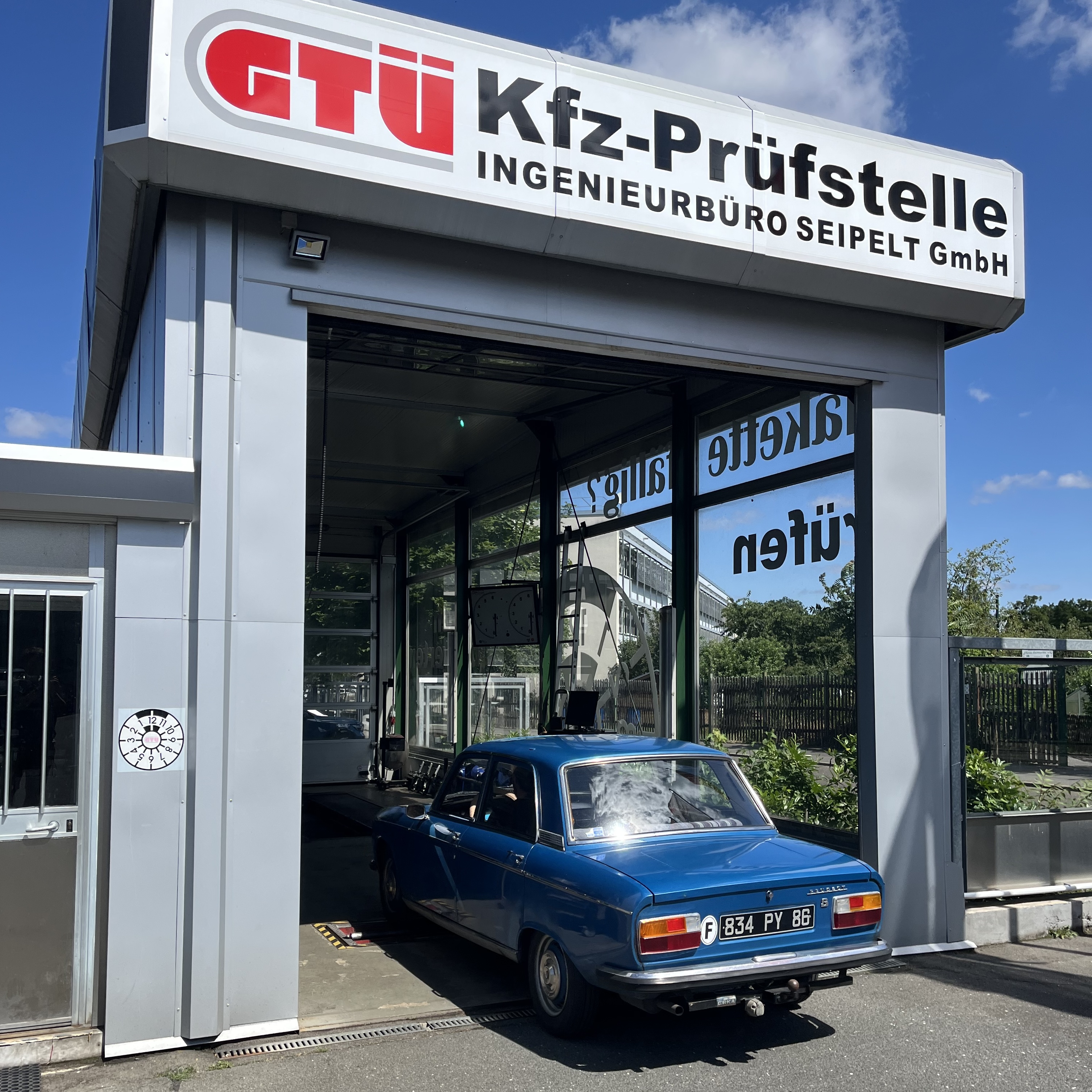
Today I took my 1974 Peugeot 304 to the German TÜV. It’s already passed its French roadworthiness test, but I knew better than to expect an easy ride here too. The German TÜV, as I suspected, is the harder hurdle.
The verdict: a few parts on the front suspension need replacing before it’ll pass. Simple enough, in theory. In practice, sourcing parts for a fifty-year-old French car is its own small project. There are a handful of online shops that specialise in this, but the exact part I need — a wear item, unsurprisingly — is out of stock everywhere. Popular enough to sell out, rare enough that nobody’s in a hurry to restock it. I’ve got four weeks to get the car fixed, and right now I don’t have the part.
So I started calling around. First stop: the classic car specialists. Even they don’t know a 304 particularly well — in Germany, it’s exotic enough that few workshops have ever had one on the ramp. That unfamiliarity doesn’t come cheap: one quoted 500 euros just for a wheel alignment, on top of 150 euros an hour, net, for labour. I paid 3,500 euros for the whole car. A single alignment eating into that isn’t a number I can just shrug off.

On a whim, I tried ATU instead — not exactly known for vintage Peugeots. I half expected to be laughed out of the car park. Instead, they said yes, they can do the work. The catch: they don’t have all the parts either. So I’m still hunting for that one suspension component, just with slightly better odds and a much cheaper labour rate on my side.
There’s something almost funny about a car this old exposing such a modern problem: not everything can be fixed with money if the part simply doesn’t exist on a shelf anywhere. Classic car ownership, I’m learning, is as much about logistics as it is about mechanics.
Have you ever gone down the rabbit hole of sourcing parts for an old car? Where do you look once the obvious shops come up empty?