
Recently, I walked past a poster for alcohol-free Sternburg. It asked, with a hint of disbelief, whether Sternburg could even make a beer without alcohol. I laughed when I saw it. Then it hit me: I do not drink Sternburg because I think it tastes good.
And that is perfectly fine sometimes. We do not always choose a brand because it tastes the best. But when I want a beer I really enjoy, I reach for a different one.
Please do not get me wrong: I like alcohol-free beer. I buy it from other breweries, and sometimes I prefer it to the alcoholic version. To my taste, alcohol leaves a bitter aftertaste. Take it away and the beer is simply better. I find it harder to picture an alcohol-free version of Sternburg, though.
That difference stuck with me. The easiest change is often the one where the alternative does not feel like a compromise.
The substitute has to win on its own merits
We often ask people to give something up: alcohol, petrol, unhealthy food, a familiar habit. Then we offer them a version that is technically better for them, but less enjoyable. We act surprised when the old thing keeps winning.
A better offer changes the calculation. If the alternative tastes better, feels better, performs better or simply makes more sense for you, switching asks less of your willpower. You are not only avoiding a downside. You are choosing an upgrade.
That does not explain every addiction, and a better product cannot replace support when someone needs it. But the principle matters for the everyday choices and systems we can redesign.
Tesla made the electric car desirable first
Tesla understood this with its first car. It did not begin with a small, inexpensive electric runabout and ask people to overlook the compromises. It began with the Roadster: a high-performance sports car, designed to take on the likes of Porsche and Ferrari. The original plan was to use that desirable, expensive car to establish the technology, then move towards more affordable models.
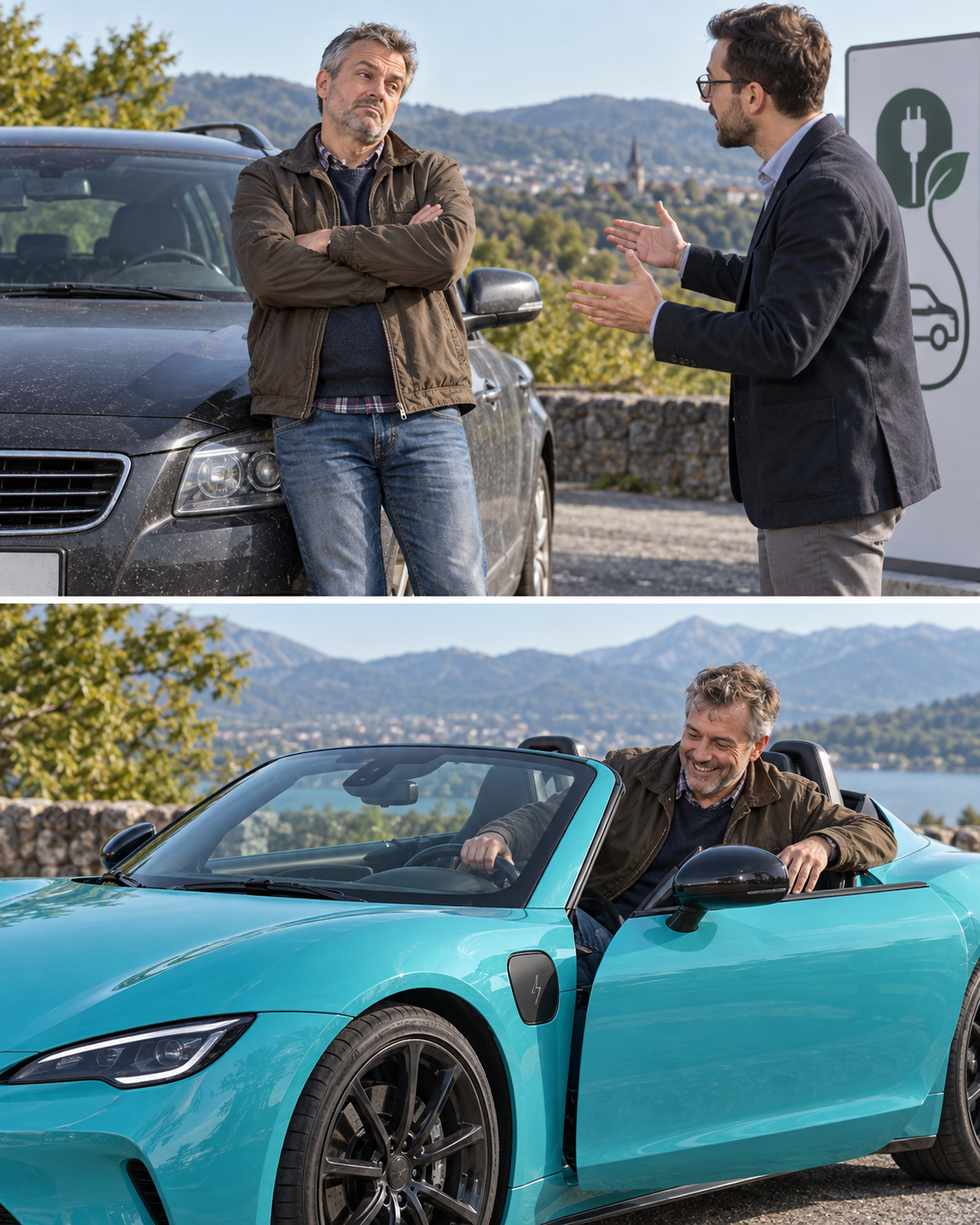
That was a clever order. A sports car made electric power feel exciting. Its speed and design gave people a reason to want it before they had to care about its environmental benefits. The better alternative was not asking for sympathy. It was making its own case.
Lecture Diesel Dieter? Let the electric sports car do the talking.
Make the good choice the appealing one
We could use more of that thinking. If we want people to choose healthier, cleaner or more sustainable options, we should make those options genuinely satisfying. Make the plant-based meal delicious. Make public transport convenient. Make the repairable product something people are proud to own.
Sometimes the best way to help someone change is not to remind them what is wrong with the old choice. It is to build something they like more.
What would become easier to give up if the alternative felt like an upgrade?